Nicola Stoev

Nicola Stoev is a Bulgarian economist. He had been a foreign investors’ consultant in Bulgaria and a chief expert at the Bulgarian Ministry of Finance, where he wrote among others, analyses about the Bulgarian economy (in the context of the global economy), sent to the IMF, the EIB and the World Bank. Currently, Nicola Stoev is the founder and managing director of a foundation called Dobro Surce. His posts on geopolitics and international economy may be viewed at https://stoev.substack.com/.

US Answer to China Economic Challenge Starts at Home

A Boeing Plant in Seattle; cc Jetstar Airways, modified, https://www.flickr.com/photos/jetstarairways/9130160595

Sound industrial and geopolitically-minded policy is needed to shore up US competitiveness in the face of the challenges posed by China’s economy – not tariffs.

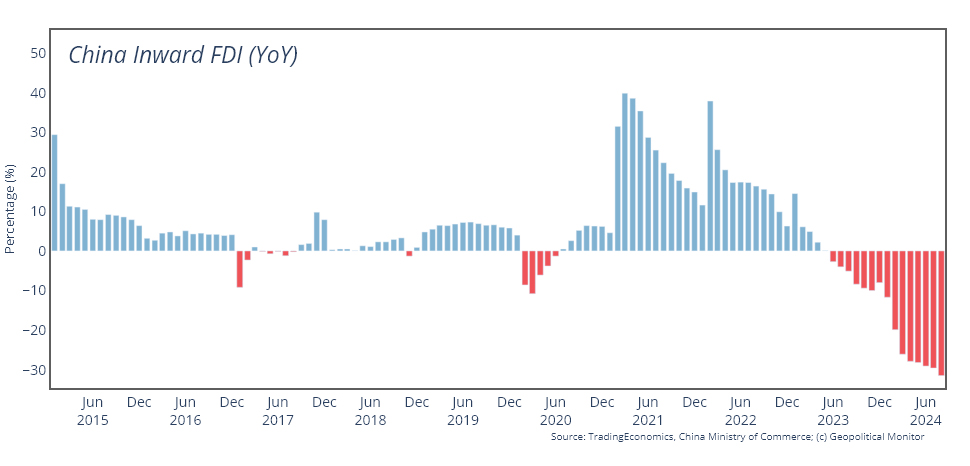
Foreign Firms Confront Escalating Challenges in China Market
header

As policy, economic, and geopolitical challenges mount, foreign firms are finding it harder to make money in the China market than a decade ago.

Cloud Seeding and the Water Wars of Tomorrow

cc Falcon Photography, modified, https://flickr.com/photos/falcon_33/

Cloud seeding is increasingly looked to as a mitigation tool for the worst effects of the climate crisis. But as rain becomes scarcer, the technique risks fomenting conflict between states competing for the same clouds.

What Are Harris and Trump Proposing for the US Economy?
cc kees torn, modified, https://flickr.com/photos/68359921@N08/15836250849/in/photolist-dh2dAh-nFL5vn-6zgUow-q8oVDK-c4P1aA-ayqFXf-fxKZKH-cQ3r5o-R59zbi-MLGBqf-xYGwV3-of8gzb-fTz7ii-pQid6k-9tKTPT-atKVFb-cfBDGQ-nLiB9D-cPig2A-9tKN8x-rqhYLp-nr6TYM-5wQKNm-pBpv9R-LFeAJU-wVDHzG-v1BBDo-sSxaKx-qnqMY3-kKvXWV-nPcGfN-x39Pzm-d9rBQ9-rmcEQ9-pH9zy4-moySzp-q7RShS-oH3SMw-ab8HoF-r2MPrY-nvi1ps-fxL1de-pF5v4A-N4z1Fn-apR1ki-nBQEEF-EtR1ah-rVyn3C-oyJa1i-RkA3Ro

Four policy areas are coalescing in the platforms of both US presidential candidates: housing, immigration, food prices, and tariffs. Yet none of these plans can address the fundamental weaknesses of the US economy.  

Eastern Europe Has a Role to Play in US-China Economic Competition

President Joe Biden walks along the West Colonnade of the White House with President Andrzej Duda and Prime Minister Donald Tusk of Poland, Tuesday, March 12, 2024., cc White House, modified, https://commons.wikimedia.org/w/index.php?search=biden%20poland&ns0=1&ns6=1&ns12=1&ns14=1&ns100=1&ns106=1#/media/File:President_Joe_Biden_walks_along_the_West_Colonnade_of_the_White_House_with_President_Andrzej_Duda_and_Prime_Minister_Donald_Tusk_of_Poland,_Tuesday,_March_12,_2024.jpg

Increased capital intensity is the cure to what ails the US economy, and Eastern Europe can help provide it.

Without Allies, the U.S. Falls Behind China

cc Gobierno de Chile, modified; Leaders of the now-defunct TPP agreement; https://commons.wikimedia.org/w/index.php?title=Special:Search&limit=500&offset=0&ns0=1&ns6=1&ns12=1&ns14=1&ns100=1&ns106=1&sort=last_edit_desc&search=trans-pacific+partnership+filetype%3Abitmap&sort=last_edit_desc&advancedSearch-current={%22fields%22:{%22filetype%22:%22bitmap%22}}#/media/File:Leaders_of_TPP_member_states.jpg

The realities of global trade and domestic deindustrialization cannot be glossed over with non-binding initiatives like the IPEF; either the United States adapts and brings allies on board, or it falls behind.

West Asleep at the Wheel at the Dawn of ‘Cold War 2’

cc ermaleksandr, modified, https://flickr.com/photos/77258709@N06/32518319765/in/photolist-RxwTxB-72p9yQ-zX9cdN-7uj6Zz-2pT81Uk-gEhYmF-5A2g22-7HNd4N-2pT8JSe-CaWLim-2pQm74Y-gzVB3z-aD97kj-2pT9bx8-2nzNrk7-RmJ6rM-dkaqHc-dkasrA-8ABrzF-aD5gHg-vE5TPh-99pzjS-99moHD-7zSs7M-99pwiW-eap9oC-eait6r-eapkcE-2pPYR7M-5B4xAa-zhuCqe-nKEZBJ-7zWbYL-829FbA-dpUmzd-6Zp3cd-6Zp3c9-6Zkron-XU8KiS-2nUwexy-6ZkrYP-2oj4EWp-2pTtixh-2pT8224-dpTYmk-6ZByLf-6Zkq7g-6ZBwhu-aJPSjF-6ZBx39

While China and Russia make moves to shore up their positions in the geopolitical contest to come, the United States and Brussels opt for a comforting state of denial.

Playing Catch-up? West-China Competition in the Global South

cc The Russian Presidential Press and Information Office, modified, https://commons.wikimedia.org/w/index.php?search=china+belt+and+road+filetype%3Abitmap&title=Special%3ASearch&profile=advanced&fulltext=1&advancedSearch-current=%7B%22fields%22%3A%7B%22filetype%22%3A%22bitmap%22%7D%7D&ns0=1&ns6=1&ns12=1&ns14=1&ns100=1&ns106=1#/media/File:Belt_and_Road_international_forum._Right_President_of_China_Xi_Jinping.jpg

A Western reproduction of Belt and Road is not desirable, let alone feasible. Rather, if the West is to make up ground in the Global South, it will start with win-win cooperation that takes the interests of non-aligned partners into account.

CHIPS Act Wins the Battle, But Not the Semiconductor War

cc The White House, modified, https://www.flickr.com/photos/whitehouse/52517539215

The CHIPS Act buys time for the US semiconductor industry. But if Washington and other Western allies desire a lasting victory, they will have to beat Beijing at its own game.

More Stories
Back to Top
Keep Pace with a Changing World
Sign up to our mailing list for weekly reports and discounted subscription rates.
Use Code:
0
0
0
0
Act now for a limited-time deal on an annual subscription.
GPM99
: