On June 9, Anthropic launched Claude Fable 5, its most powerful model yet. Just three days later, on June 12, the company received a letter from US Commerce Secretary Howard Lutnick to CEO Dario Amodei ordering it to suspend access to both models for any foreign national, “whether inside or outside the United States, including foreign national Anthropic employees.” Because the company could not reliably enforce these restrictions, it chose to take the model offline completely for all users.
At the center of this storm is Mythos, a large language model developed by Anthropic with uses in cybersecurity, including finding vulnerabilities that can be exploited. Mythos was originally developed, not for public use, but for a consortium of companies to “secure critical software for the AI era” under Project Glasswing. Unlike Mythos, Fable has safeguards built around cybersecurity that essentially downgraded users to a less powerful model whenever a prompt referenced a topic mentioning it. However, it was reported that there was a reliable “jailbreak” to get around those safeguards, which prompted the government to issue its directive, ultimately leading to Anthropic disabling Fable. It remains to be seen how Anthropic plans to launch Fable to users again while being in compliance with the directive. Meanwhile, the issue highlights one of the most important concerns of this new AI era: dual-use AI.
Dual-use Technologies
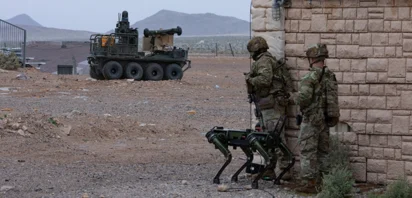
Dual-use technologies refer to those that could be used for both military and civilian purposes. In International Relations, nuclear technology is a quintessential example of dual-use technology. Dual-use technologies pose a special risk due to the inherent ambiguity surrounding their use, and the plausible deniability that bad actors may have who purportedly acquire them for civilian use but really intend to use it for other purposes. As a result, special constraints (including strict export restrictions) have been imposed on dual-use technologies, with multiple safeguards and monitoring mechanisms. While some of these constraints are arguably arduous and unfair, they are also necessary to ensure that these technologies are not used for military purposes.
Unlike nuclear technologies, which can be tracked through physical supply chains and controlled through tangible chokepoints, AI models exist as code: copyable, distributable, and far more difficult to contain once deployed. This highlights the main issue with AI as a dual-use technology.
AI as Dual-use Technology
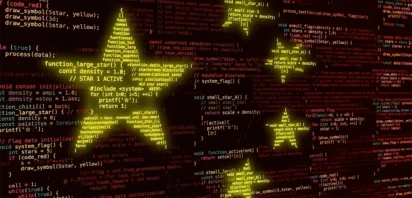
While AI has long had applications in defense and national security, its dual-use risks have historically been limited. However, in the last two years, the advances in large language models, especially for certain specialized tasks like coding, have completely changed the paradigm. Not only can AI be used to find vulnerabilities and patch them, it can also be used to exploit those same vulnerabilities. The use of AI to write code for malware is not just a hypothetical threat now, it is very real. In November 2025, Anthropic disclosed that it had detected and disrupted what it described as the first largely autonomous, AI-orchestrated cyber espionage campaign, attributed to a Chinese state-sponsored group designated GTG-1002.
What matters especially is not quality but scale and speed. Previously, designing a new exploit took time. While off-the-shelf malware was available and used by smaller groups, those were often patched through software updates. By using LLMs like Mythos to design new malware that exploits previously unknown vulnerabilities, one can produce a large number of them in a very short period of time, with few resources. This includes the ability to automate large portions of cyberattacks that previously required sustained human effort. This lowering of the entry barrier means that threat actors now include not only state and state-backed actors, but also independent non-state actors that were previously too resource-constrained to do the type and scale of damage that they could do now.
There is also a growing sense that these capabilities are improving at an unusually rapid pace, with some evidence suggesting that frontier models’ ability to carry out complex tasks is increasing on timelines measured in months rather than years.
Establishing Safeguards on AI
What is the solution to dual-use AI? Much like dual-use nuclear technologies, it is likely that solutions lie in implementing appropriate safeguards, including monitoring mechanisms. Already, certain restrictions have been placed. Since 2022, the US Bureau of Industry and Security has progressively tightened controls on advanced AI chips and the equipment used to make them, citing concerns about military applications in China. However, the center of control is beginning to shift from physical infrastructure like chips and servers to access itself. Governments are increasingly attempting to regulate who can use specific models rather than just how they are built. The move to restrict Claude Fable’s access is one such move in this direction.
Two challenges still remain, however. Firstly, unlike nuclear technologies which are used by a very small and specialized section of the population, AI is used by almost everybody. Even if one assumes that fewer people will use the latest and most capable models, the numbers are still much larger than users of other dual-use technologies. This creates an inherent challenge in monitoring. Secondly, unlike other dual-use technologies that are physical, AI exists in the virtual realm. While there are physical components (including servers and powerful GPUs) which can be monitored and restricted, it is much harder to monitor and restrict something that only exists virtually. There are no easily available answers to this problem, but these are the very challenges that the AI safeguards policy community need to come up with solutions for.
Looking Ahead
The debacle surrounding the launch of Fable by Anthropic is only the tip of the iceberg of dual-use AI. Even if Anthropic finds a way to patch the jailbreak, others will be discovered. The Fable episode may prove to be less of an anomaly and more a preview of how governments will respond to increasingly capable models. The ultimate tension comes from the fact that any solution must impose regulations on an industry that seemingly opposes any form of governmental regulation (while wanting to work hand in hand with the government). Unless the policy community comes up with a solution, the AI arms race will mean that more dangerous models will get into the hands of bad actors who wish to use them for nefarious ends. The resolution of this issue will also have serious geopolitical implications, including that in US-China relations.
The views and opinions expressed in this article are those of the author alone and do not represent those of Geopoliticalmonitor.com