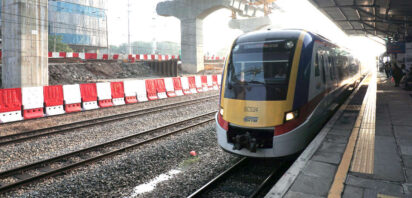
In an effort to attract investment and rejuvenate its economy, Iraq has unveiled an ambitious $17 billion transportation project known simply as the “Development Road.” This project, symbolizing Iraq’s ambition to become a regional transportation hub, aims to connect Europe with the Middle East. If realized, the project would offer a competitor to the Suez Canal, stimulating trade activity and enhancing Iraq’s clout in the region. This report examines the geopolitical and economic ramifications of this potentially transformative venture.
Iraq’s strategic location, bridging East and West, gives the Development Road project considerable strategic value. Envisioned to extend from the northern border with Turkey to the Gulf in the south, the project would unify a geopolitically diverse region and represent a shift in regional dynamics by restoring Iraq to a central position in the Middle East, a status it has sought to regain since the US invasion.
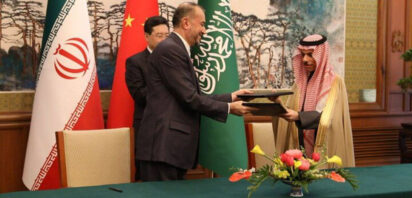
The project’s construction also hints at a possible realignment of regional alliances and partnerships. Despite their historical tensions, countries such as Iran, Saudi Arabia, and Turkey appear to share an interest in the venture, potentially fostering improved inter-state relations. Conversely, it could also intensify rivalries as these countries, and others, compete for influence over this emerging regional hub.
Additionally, as a potential route for energy resources from Iraq and neighboring countries to Europe, the appetite for the Development Road will likely benefit from the growing list of EU members seeking diversified energy sources amid sanctions on Russian energy imports. Consequently, the Development Road could become a focal point for powers like China, Russia, the US, and the EU exerting their own influence to shape the project’s direction.
Economically, the Development Road project represents Iraq’s proactive approach and desire to decrease its oil dependence and enable growth in non-extractive sectors. Furthermore, the project aims to generate employment and draw foreign investment to aid the reconstruction of Iraq’s post-war economy. For neighboring countries, the project seeks to improve trade, encourage regional economic interdependence, and enable the smooth movement of goods, services, and people with road and railway connectivity. Nevertheless, the extent of these benefits would hinge on each country’s level of participation, capacity to contribute, and readiness to exploit the potential gains.