In June 1950, US warships entered the Taiwan Strait at a moment of uncertainty. The Chinese Communist Party (CCP) controlled the mainland and was raging on the Korean Peninsula.
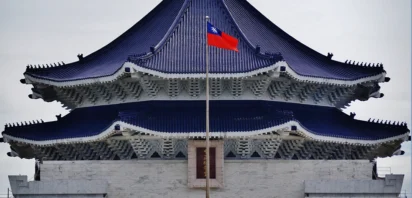
For the Republic of China (ROC), isolated on Taiwan and militarily depleted, the arrival of the US Seventh Fleet ensured survival by blocking any immediate invasion. The ROC flag remained aloft. The state endured. Yet this survival came with a quiet cost.
US protection was not neutral. The Seventh Fleet blocked Chiang Kai-shek’s plans to retake the mainland, and it placed Taiwan within a US-designed strategic framework. From that moment, Taiwan no longer controlled the timing or scope of its own escalation. Security was preserved, but choice narrowed.
Over time, the character of this influence evolved from military control to diplomatic management to economic and technological leverage, but the logic remained constant. Taiwan could govern internally and democratize, yet its external status and strategic direction stayed constrained.
This essay envisions Taiwan’s condition as one of limited agency. The term does not suggest passivity or failure. Taiwan governed itself, built institutions, and later became a democracy. Limited agency instead refers to constrained choice within boundaries enforced by a protector. Taiwan could decide many things, but not the terms of its own external status.
That history matters now.
Taiwan enters the late 2020s more secure than at any time since 1949, yet more structurally dependent than at any point since democratization. The cage has grown sturdier, even as the world outside it grows more dangerous.
The Evolution of US-Taiwan Relations
The Foundational Moment: When Survival Became Conditional (1950–1958)
The limits on Taiwan’s agency emerged from a decisive moment in the summer of 1950. When President Harry Truman ordered the US Seventh Fleet into the Taiwan Strait at the outbreak of the Korean War, he prevented a likely attack by the People’s Republic of China (PRC). At the same time, he fixed the terms under which the ROC would survive. Truman described the deployment as a “neutralization” of the Strait.
In effect, it froze Taiwan’s role in the unresolved Chinese civil war. Chiang Kai-shek still hoped, faintly, to reclaim the mainland. The Seventh Fleet made that impossible. Survival came at a cost: Taipei could no longer pursue military ambitions independently. Decisions about war and peace shifted decisively to Washington.
This intervention reshaped Taiwan’s strategic identity.
Before 1950, the island remained a retreating regime, still claiming authority over China. Afterward, it became a security asset within an US-designed framework. Washington did not govern Taiwan directly, yet it exercised decisive influence over the use of force.
Sovereignty remained intact in law, but it narrowed sharply in practice.
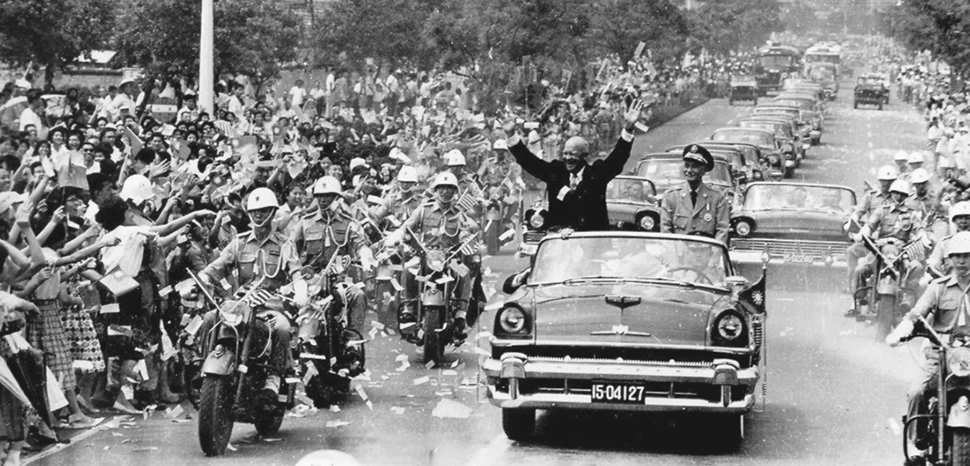
The 1954 Mutual Defense Treaty formalized this arrangement. It guaranteed protection against external attack while tying Taiwan firmly to US strategic planning. During the Taiwan Strait Crises of 1954–1958, American military support proved vital. Arms, logistics, and intelligence flowed steadily, yet each action carried implicit conditions. Washington imposed vetoes, required consultation, and signaled limits on escalation.
Initiative and unilateral decision-making disappeared. Delayed approvals and private warnings became the invisible instruments of constraint. Defiance risked abandonment; compliance ensured protection.
By the late 1950s, Taiwan had integrated into the US-defined defensive perimeter across the western Pacific. The island enjoyed peace, recovery from war, and institutional stabilization. Yet this security remained inseparable from constraint. Leaders in Taipei learned that survival required alignment with US priorities. The ROC could endure and build internally, but it could not chart a fully independent strategic course.
From the moment of US intervention, protection and limitation coexisted in tension. The Seventh Fleet secured existence while confining possibility, setting the pattern for decades of conditional autonomy.
From Ally to Instrument: Taiwan in America’s China Strategy (1960s–1979)
By the early 1960s, Taiwan remained a loyal US ally, but its strategic importance was shifting. The Sino-Soviet split fractured the communist bloc, creating new opportunities for Washington. For US policymakers, drawing Beijing away from Moscow promised leverage in the Cold War and a path to reduce involvement in protracted Asian conflicts.
In this emerging calculus, Taiwan’s role transformed from a central bulwark against communism to a variable within broader US strategy. Its survival remained essential, yet its influence over decisions that shaped its fate steadily declined.
Taiwan increasingly found itself excluded from discussions that determined its international and strategic status. Decisions about recognition, diplomacy, and security unfolded in Washington, Moscow, and Beijing, rather than Taipei. The island retained military relevance, but its value derived from what it enabled the United States to achieve, not from what it could assert independently. Taiwan became an object of strategy rather than a participant.
The Nixon administration made this hierarchy explicit.
Opening to China in the early 1970s prioritized US leverage over Taiwan’s ambitions. The 1972 Shanghai Communiqué acknowledged Beijing’s “one China” position and framed Taiwan as part of that China, even while carefully avoiding full endorsement. The message was unmistakable: Taiwan’s security mattered, but its political claims no longer guided US policy. Its status was to be managed, not asserted.
The shift reached a formal endpoint in 1979, when the United States recognized the PRC and the Mutual Defense Treaty dissolved. Diplomatic missions closed, and formal recognition vanished. Yet the United States did not withdraw entirely. The Taiwan Relations Act (TRA) established a framework for arms sales and unofficial ties, preserving security without restoring formal sovereignty or alliance equality.
Taiwan survived, but its autonomy became contingent, embedded within a structure defined by others. The island endured as a managed exception, protected enough to persist yet constrained in its freedom to act independently.
Democratization Without Sovereignty: The Post–Cold War Paradox (1980s–2000s)
Taiwan’s transformation in the 1980s and 1990s was remarkable.
The island moved decisively from authoritarian rule to a vibrant democracy. Citizens gained freedom of speech, press, and assembly. Political parties multiplied, and competitive elections became the norm. Leaders once chosen by fiat now depended on public consent. Streets buzzed with political debate and civic activism, and society took an active role in shaping its future. Within its borders, Taiwan demonstrated that sovereignty could flourish at the level of governance and daily life.
Yet this internal flourishing occurred against a rigid international backdrop.
Globally, the world recognized the PRC as the sole representative of the Chinese state. Formal allies dwindled, and Taiwan remained marginalized in international institutions. Popular sovereignty clashed with structural constraints. The government could innovate politically and pursue domestic reforms, but it could not secure the recognition or legitimacy that most states take for granted.
Democracy thrived, yet the island’s external agency remained tightly bound.
Lee Teng-hui’s tenure illustrates this delicate balance. In 1999, he framed cross-strait relations in “state-to-state” language, emphasizing that the Republic of China on Taiwan existed independently from the PRC.
Domestically, the formulation energized debate and strengthened a sense of sovereignty. Abroad, however, the United States responded quickly, signaling that actions which could provoke Beijing were unacceptable. Washington did not contest Taiwan’s internal democratization but circumscribed the ways in which it could assert external independence.
Lee expanded Taiwan’s self-definition while external boundaries remained firm. Then, Chen Shui-bian’s presidency further revealed the limits of procedural containment.
From 2000 to 2008, his administration pursued referendums, considered constitutional reform, and sought UN membership. Each initiative met firm US resistance. Washington emphasized process rather than ideology: unilateral moves toward independence risked destabilization.
Chen faced domestic pressure to expand recognition, but US guidance narrowed his options. Democracy allowed robust internal debate and policymaking, yet global engagement remained constrained.
These decades reveal a central paradox.
Taiwan strengthened legitimacy at home, empowering citizens to shape governance, while its sovereignty remained limited internationally. Leaders could legislate, hold elections, and conduct referendums, but external recognition, diplomatic space, and global standing remained circumscribed by the interests of larger powers.
The post-Cold War era demonstrated that Taiwan could advance survival and self-determination internally while operating within boundaries imposed by a global order that prioritized stability over local ambition.
Managing Dependence: Stability as a US Preference (2008–2016)
When Ma Ying-jeou assumed the presidency in 2008, he pursued cross-strait reconciliation under the “1992 Consensus,” an informal understanding acknowledging “one China” with respective interpretations. This approach enabled economic and social integration, most notably through the Economic Cooperation Framework Agreement (ECFA) in 2010, which reduced tariffs on over 500 Taiwanese products, established direct transport links, and boosted trade from $91 billion in 2008 to over $150 billion by 2015.
Ma framed these measures as pragmatic de-escalation, generating economic benefits while lowering tensions.
The effort culminated in November 2015 with the Ma-Xi summit in Singapore, the first leader-to-leader meeting since 1949. The encounter emphasized dialogue without formal agreements or sovereignty concessions. Ma called it a “milestone for peace,” but it underscored the limits of engagement amid domestic and international constraints.
The United States welcomed reduced tensions while ensuring Taiwan did not drift too close to Beijing, illustrating the island’s limited agency.
Arms sales reinforced deterrence without provoking China. In January 2010, a $6.4 billion package included Patriot missiles and Black Hawk helicopters. In 2011, Taiwan’s request for 66 new F-16 fighters was denied; upgrades to existing jets were offered instead. These decisions constrained military modernization and capped independent action.
Diplomatic channels, including the American Institute in Taiwan (AIT), also shaped Taiwan’s political options. When Ma proposed a “peace agreement” in 2012, US warnings led him to shelve it. Economic engagement was allowed, but political concessions remained blocked, reinforcing structural limits on Taiwan’s agency.
Even measured engagement sparked domestic resistance.
In March 2014, the Sunflower Movement occupied the Legislative Yuan for 24 days, protesting the opaque Cross-Strait Service Trade Agreement, an ECFA extension. Activists feared economic integration could erode political autonomy. The movement forced Ma to halt ratification and revealed a generational divide. Ma’s tenure overall illustrated a persistent tension: Taiwan gained economic benefits and cross-strait stability, yet these came with limits. Prosperity and security advanced alongside dependence, and domestic civic energy became the main avenue for asserting agency within a framework shaped by powerful neighbors.
Security Without Alliance: Taiwan in the Era of Strategic Ambiguity (2016–2024)
When Tsai Ing-wen assumed the presidency in 2016, Taiwan faced an evolving and increasingly complex security environment.
The People’s Liberation Army (PLA) rapidly modernized, expanded patrols, and conducted aerial incursions near the island. In response, the United States increased arms sales and deepened security cooperation. Taiwan received advanced missiles, precision munitions, and surveillance systems, enabling a shift toward asymmetric defense strategies. Mobile missile units, anti-ship capabilities, and hardened command-and-control infrastructure strengthened deterrence.
These measures enhanced Taiwan’s resilience, but they came with constraints. Each upgrade and deployment followed US guidance and schedules, limiting Taipei’s strategic autonomy.
Despite growing capabilities, Taiwan remained outside a formal alliance.
Washington preserved strategic ambiguity, retaining flexibility while leaving Taipei uncertain about the scope and timing of intervention in a crisis. Taiwan had to plan as if support could be delayed or politically constrained. Every military decision required careful calculation, balancing defense needs against external expectations.
At the same time, gray-zone pressures intensified.
The PLA tested Taiwan’s responses through repeated air incursions, electronic warfare exercises, and simulated blockades. Taiwan absorbed risk and managed public perception without the freedom to escalate. Strategic ambiguity prevented open war but also constrained proactive defense. Military support improved survival prospects but did not expand true agency.
Economic Sovereignty Under Constraint: Chips, Chains, and Compliance (2020s)
Taiwan’s technological prominence is extraordinary.
At the center stands Taiwan Semiconductor Manufacturing Company Limited (TSMC), producing most of the world’s most advanced semiconductors. Its chips power everything from smartphones to defense systems. The company is no longer only a national asset. It is a global linchpin. For the United States, Taiwan’s semiconductor capacity represents both opportunity and leverage, linking economic strength to strategic importance.
The January 15, 2026, US-Taiwan Agreement on Trade & Investment illustrates this new layer of influence. Under the deal, Taiwanese semiconductor and technology enterprises commit to at least $250 billion in new direct investments to build and expand advanced semiconductor, energy, and artificial intelligence production and innovation capacity in the United States.
Taiwan will also provide credit guarantees of at least $250 billion to support additional investment by Taiwanese enterprises, facilitating the full semiconductor supply chain and ecosystem in the US. This builds on TSMC’s prior $100 billion pledge in 2025, with further commitments to follow.
In return, the United States establishes a predictable tariff framework: reciprocal tariffs on most Taiwanese goods are capped at 15% (down from 20%), with zero tariffs on generic pharmaceuticals, their ingredients, aircraft components, and certain unavailable natural resources.
For Taiwanese semiconductor producers investing in the US, future Section 232 duties (if imposed) will reward such commitments. During the approved construction phase of new US facilities, companies may import up to 2.5 times their planned US production capacity duty-free. After project completion, the duty-free import allowance continues at up to 1.5 times new US production capacity.
Members of the Trump administration have implied that the goal of the agreement is to relocate a significant portion of around 40% of Taiwan’s advanced supply chain to the United States over time, though the viability of this goal has been roundly rejected by the Taiwanese side. Taiwan gains tariff stability, reduced exposure to potential future global chip tariffs, and stronger market access for high-tech exports. The US secures greater domestic capacity and supply-chain resilience.
Economic security has become a mechanism of influence, extending US leverage through capital flows, investment incentives, and tariff alignment.
Taiwan’s prosperity advances alongside its dependence. In the modern era, economic safeguards strengthen stability but replicate the logic of military protection: every step forward depends on navigating boundaries set by a more powerful partner.
What Taiwan Cannot Choose: Structural Boundaries of Agency
Taiwan has long faced a tension between apparent freedom and real constraints.
On paper, options seem open: independence, reunification with the mainland, or neutral autonomy. In practice, none of these are fully attainable. Geography, global power dynamics, and the strategic priorities of larger states limit what Taipei can safely pursue. Survival and sovereignty are intertwined with these external pressures, leaving Taiwan to navigate a narrow corridor of viable choices.
Formal independence brings obvious risks. Beijing treats it not as a policy difference but as a challenge to regime legitimacy. A declaration would not resolve Taiwan’s status. It would ignite a crisis whose costs would fall first on Taiwan’s own society. Even firm US backing could not guarantee protection from blockade, economic rupture, or prolonged conflict. Taiwanese leaders across political camps grasp this reality. Sovereignty announced without the means to defend it risks is symbolic, not durable.
Reunification presents a mirror dilemma. Political integration with the mainland promises reduced tension and economic access yet demands concessions that strike at the core of Taiwan’s democratic life. The swift erosion of autonomy observed in Hong Kong confirms what many already fear: any unilateral move toward reunification will shift leverage decisively away from Taipei. Taiwan cannot negotiate political union as an equal, and the imbalance will only widen over time.
Neutral autonomy seems like a compromise, yet Taiwan’s strategic location, democratic system, and technological significance make true disengagement impossible. US policymakers might not tolerate neutrality, and China’s proximity leaves the island inherently exposed. Autonomy always exists in tension with vulnerability.
The Lai Administration and the Future of US-Taiwan Relations
The Lai administration inherited a delicate balance built over decades. US-Taiwan relations had created clear patterns, and neither side sought disruption. Continuity became the guiding principle. Washington maintained strategic ambiguity, and Taipei aligned defense, economic, and diplomatic planning with US expectations. Protection persisted, but autonomy remained limited.
Coordination deepened across military, economic, and diplomatic domains.
Taiwan absorbed advanced capabilities while shifting toward asymmetric defense. The 2026 semiconductor pact tied production and technology decisions to US oversight, reinforcing Taiwan’s global importance while constraining independent economic policy. Diplomatic signaling required similar care. Visits, statements, and multilateral engagement were weighed against domestic priorities and how Washington would interpret them.
Yet constraints persisted.
Formal independence remained off-limits, cross-strait relations could not be redefined unilaterally, and policy choices were bounded by structural dependencies. Domestic politics and public opinion mattered, but ultimate agency was framed by external conditions.
Taiwan’s challenge is clear. Security, recognition, and technological opportunity coexist with structural dependence. Success requires resilience, strategic patience, and subtle assertion of sovereignty within imposed limits.
The Lai administration illustrates a persistent paradox: Taiwan is stronger and more capable, yet less free to act independently. Its future hinges on whether constrained partnership can evolve into meaningful agency, allowing Taipei to shape its trajectory while navigating a world dominated by powers whose interests often outweigh its own.