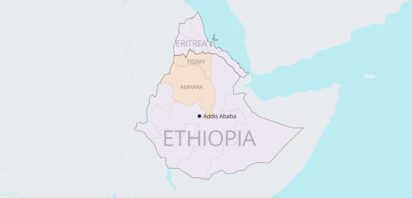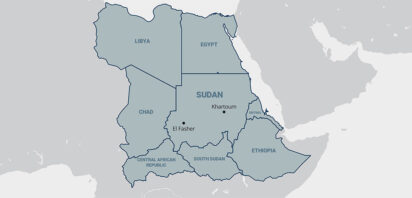
Fighting has broken out between Sudan’s armed forces and Ethiopian soldiers in the disputed region of al-Fashaqa along their shared border, with early reports indicating that Sudanese forces have destroyed a military base near Kabal Kala al-Laban. The region, known for its arable land, has long been a flashpoint in the bilateral relations of the two countries, and recent clashes threaten to internationalize the brutal civil war ongoing in Ethiopia and trigger a wider regional conflict.
Analysis
The bilateral conflict over the al-Fashaqa region dates back over 100 years to the drawing of an 800 km colonial-era border, which is to this day used as the modern demarcation of Sudan, Ethiopia, and Eritrea. The division was immediately controversial as it bestowed to Khartoum legal authority over what was de facto an Ethiopian space, at least in day-to-day economic terms, resulting in an ebb and flow of localized clashes over the years, primarily over access to arable land. The cycle of violence seemed to be halted with a compromise in 2008 which saw Ethiopia recognize the border in exchange for Sudan supporting the Cooperation Framework Agreement – an international treaty establishing a permanent institutional framework for managing the Nile’s waters. Under the terms of the deal, the Sudanese authorities agreed to look the other way when policing cross-border traffic from nomadic groups that farm the area; however, subsequent migration patterns served to destabilize the compromise as new outside groups came from within Ethiopia to al-Fashaqa in search of a better life.
Why has the conflict re-ignited recently? The immediate reason is the Ethiopian civil war, which destabilized the Ethiopian side of the border and provided a pretense for the Sudanese military to move into and fortify the area. The first wave of clashes broke out in 2020, kicking off a renewed cycle of mobilization and violence perpetrated by various belligerents from the armed forces of Sudan (including the paramilitary Rapid Support Forces), Eritrea, along with ethnic militant groups originating in the Amhara (which borders al-Fashaqa) and Tigray.