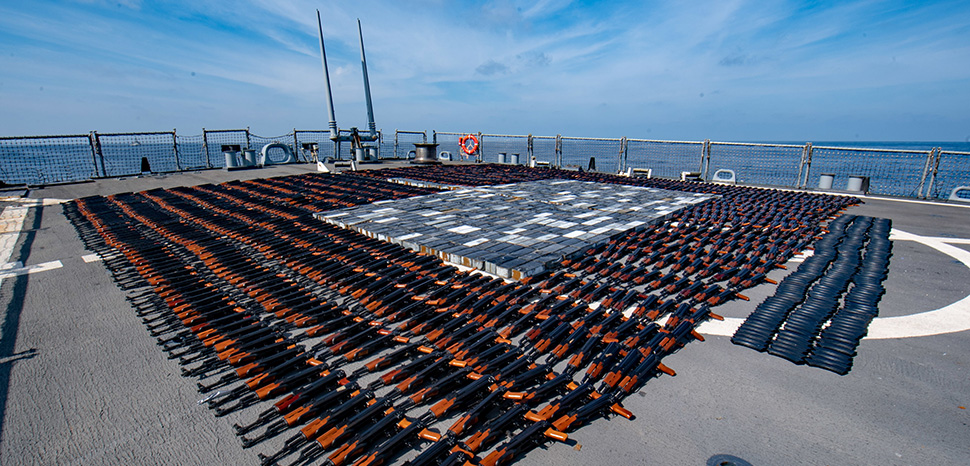
Russia has long been the top arms supplier to Africa. However, the Ukraine war has made it difficult for Russia to maintain its arms exports to Africa due to international sanctions and the need to support its ongoing conflict. Seizing this opportunity, China, the world’s second-largest arms producer and fourth-largest arms exporter, is dramatically expanding its arms exports to Sub-Saharan Africa.
Chinese weapons have been found in numerous conflict zones across Sub-Saharan Africa, as Beijing has been actively supplying weapons to conflicts in Sudan, the Democratic Republic of Congo (DRC), South Sudan, and Ethiopia. Additionally, Chinese weapons are flowing into Chad, Angola, Nigeria, Mali, and other countries. In Nigeria, weapons factories have been established, exporting Chinese arms to other African nations, such as Zimbabwe.
Some of China’s largest arms companies are exporting a wide range of weapons to the continent, ranging from small arms, light weapons, and ammunition to more sophisticated equipment like armored vehicles, drones, and naval vessels. Key exporters include Norinco, which has opened a sales office in Senegal supplying small arms, artillery, and armored vehicles; and Poly Technologies, offering a wide range of military equipment, including rockets, artillery, and armored vehicles. AVIC is known for aircraft and aerospace components, while CSGC specializes in firearms and ammunition. CASIC focuses on missiles and space systems, and CETC provides radar and electronic warfare systems. Moreover, all of these companies are state-owned, allowing the authorities to direct and leverage the flow of arms sales, maximizing potential geopolitical gain.
The People’s Liberation Army (PLA), along with private military companies (PMCs) and private security companies (PSCs) closely tied to the government, play key roles in the flow of arms. The physical transfer of weapons is often carried out by the PLA, while PMCs and PSCs provide training and maintenance support, which is included in the overall purchase package.
Compared to Western alternatives, Chinese weapons tend to malfunction more frequently and be of generally lower quality. However, they are cheaper than US or Western options, making them popular among cash-strapped regimes and militias. China has even been known to sell weapons at below market prices and often provides flexible financing options for arms purchases, including long-term loans and barter deals involving natural resources. While the United States is the world’s largest and preferred arms exporter, US purchases require immediate payment in US dollars. In contrast, the lenient payment terms offered by China can appeal to cash-strapped states (particularly in terms of forex), and this has helped situate Beijing as a major player in the African arms market.