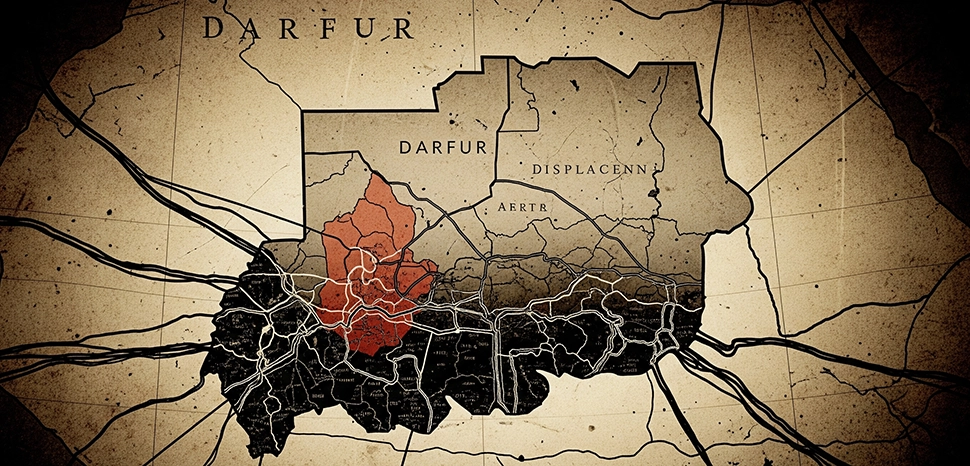
According to a new report by the American NGO Human Rights First (HRF), China is selling small arms to Sudan, which are used in the Darfur conflict to maim and kill civilians, in exchange for access to Sudanese oil.
HRF concludes that the violence in Darfur will continue unless China heeds Western pressure to stop its oil-for-weapons trade with Sudan. However China views the report as groundless and with ulterior motives, implying Western attempts to counter Chinese influence and limit Chinese access to Sudan’s oil.
While other nations reduced their small arms sales in compliance with recent UN arms embargoes, China increased its sales fivefold, becoming the largest supplier of weapons to oil-paying Sudan and fostering the Darfur conflict’s escalation. HRF states that between 2004 and 2006, China sold $55 million worth of small arms, making up 90 per cent of Sudan’s purchases.
Observers in Darfur reported seeing Chinese weaponry ranging from grenade launchers to ammunition used by the Sudanese government-backed Janjaweed, the militia responsible for the mass killing and rape of the non-Arab population since the conflict began in 2003. Chinese companies and engineers have also been sent to the region to develop and produce weaponry and vehicles for the militia.
Unconcerned by the atrocities in Darfur, China has strengthened its political, economic, and military relationship with Sudan’s government in order to secure access to much-needed oil that will sustain China’s economic growth and expansive energy needs back home.
Beijing provides Sudan with over a billion dollars in concessions to develop infrastructure for the extraction and transportation of crude oil and sends military advisers to train Sudanese troops and Khartoum-supported “oil police” guarding Chinese controlled oil fields and clearing others.
As a result, Sudan’s production in oil has increased by almost 300 per cent, from $1.2 billion dollars in 2000 to $4.7 billion in 2006, with China buying nine out of every ten barrels of crude oil. At least 70 per cent of the oil profits go to Sudan’s armed forces and militias. These oil profits are then used to buy more weapons, fueling the conflict in Darfur.
China’s desire for oil not only manifests itself in arms sales, but also in political protection of Sudan, especially at the UN. China has vetoed efforts by the Security Council to censure Sudan, weakening nine out of fourteen Council resolutions between 2004 and 2007, but was unable to stop the 2004 arms embargo against Sudan, which Sudan has rebuked and China has violated.
China defends its support of Sudan and via a policy of “non-interference in the internal affairs of other sovereign states”. This policy has seen China turn to other oil-rich nations with poor human rights records such as Iraq, Iran, and Burma since the rest of the world’s oil reserves are controlled by Western companies.