Despite Serbian and Russian objections, the Albanian majority Serbian Province of Kosovo declared independence on Monday February 18. The country was quickly recognized as independent by numerous other countries in the EU and abroad. The United States soon followed.
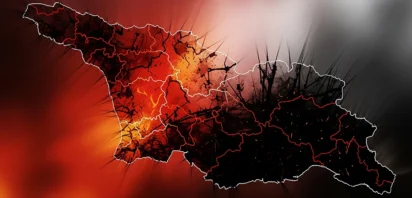
Serbia and Russia have refused to recognize Kosovo’s independence arguing the declaration is illegal and sets international precedent that is applicable to other breakaway regions including pro-Russian South Ossieta and Abkhazia in Georgia. It is unlikely that Russian will push for the application of this principle too strongly, however, as it could also be applied by separatists in Russia’s Chechnya.
There is little that Russia can do to alter events in the EU influenced Balkans. As President of Belarus, Aleksander Lukashenko, aptly noted, the time to prevent Kosovar succession has long passed. Kosovo’s declaration was merely the conclusion of the long unfolding breakup of the Former Yugoslavia. In light of this fact, current events in the region can only fully be understood in their historical context.
The History of Yugoslavia
The South Eastern European country of Yugoslavia (or ‘the Land of South Slavs’) was a monarchy formed after WWI as a kingdom of Serbs, Slovenes and Croats. It was Invaded and occupied in 1941 by Axis forces until the communist-led resistance movement gained control of the country in 1943, putting an end to the Monarchy. In 1956 the country’s constitutional democracy was suspended and a communist state was established.
The Yugoslav wars began in 1991, starting the beginning of the fractionalization of the country. The ethnic conflict lasted at least until 2001 and was, for the most part, a war between the Serbs on one side and the Croats and Armenians on the other.
Early on, Macedonia declared independence after a referendum and largely avoided conflict.